
What your business’s SEO ranking and my new red dress have in common

I have found a recurring theme in my conversations lately that needs some light shed on it. I have sat with many business owners, people with large companies, some new, some with 20 years of operating time and many of them have admitted to having no idea what SEO really is or what it does, and because of this, they have come to think its an added luxury in a modern business strategy and not the essential element for connecting them to their customer, which it is.

Scrambling for a quick explanation, I came up with a story about a red dress, which got me the “Ahhaaa, I get it now!” lightbulb moment I was hoping for.
I have now told this story about 20 times in the last month and decided I’d save myself some time and share it here.

A couple of weeks ago, I wanted to buy a red dress.
Being time poor (like most people) and not wanting to spend a day going from store to store, I typed into Google, ‘red dress, women’s workwear near me’ and ENTER.

A list of results appeared on my page, mostly from national chains and all located 40 minutes away at one of the big Gold Coast shopping centres. I drove down, found a dress that I didn’t LOVE but ticked the boxes, purchased it and went home.

A couple of days later I was down at my local shopping plaza, the type with a major supermarket chain and about 10 specialty stores, and I saw in the window of this little independent boutique the most amazing red dress, and it was the one I would have chosen.

That business had a website, but it was slow, it wasnt showing stock. The quality of the images was poor. There were minimal reviews on its GBP (Google My Business) profile, and the last photos added there was 2 years ago.

Herein lies the lesson. Google could not see it to show it.
That store missed my purchase.
This is the same for your business.

Think of SEO like a dating app. You enter your criteria of what you want and voila’, it spits out the closest matches.
If your business isn’t sitting in the catalogue, with products tagged, services listed, blogs posted to show authority on the industry or service…
Google won’t know you are someone’s perfect match and those qualified leads… go to someone else..

Digital marketing is the bridge that connects your business to the right audience, helping you show up when it matters most and for those who want more of a technical understanding, using the ROCKET framework, you’ll see exactly how SEO professionals improve your visibility online.

Check out this explanation below.

The ROCKET Framework

SEO hasn’t been replaced by AI, and it isn’t dead. It’s matured.

Modern SEO is about understanding users, building trust, and creating websites that perform well in search because they perform well for people. The ROCKET framework is a practical way to understand how SEO specialists do that today.
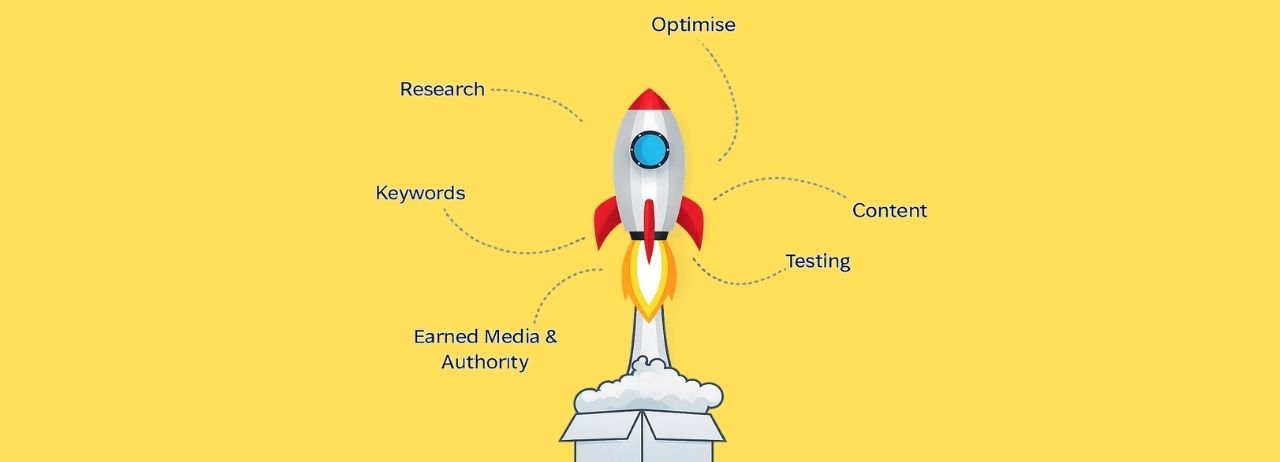
rocket seo

R ~ Research (Understanding Intent, Not Just Keywords)

Research is still the foundation, but it goes deeper than it used to.
SEO specialists analyse your business, competitors, audience, and website to understand:

  • What people are actually searching for
  • Why they’re searching (intent, not just terms)
  • What Google is rewarding on the results page
  • Where your site is underperforming or misaligned

This includes a technical audit, content review, and SERP analysis. The goal isn’t more data, it’s clarity. You can’t improve rankings if you don’t understand and speak to the problem you’re solving.

O ~ Optimise (Built for Users First, Search Engines Second)

Optimisation in 2026 is less about tricks and more about usability.
SEO specialists focus on removing friction by improving:

  • Page structure and clarity
  • Site speed and mobile performance
  • Accessibility and crawlability
  • Internal linking and information flow

Technical SEO is still critical, but it’s now the baseline. A site that’s slow, confusing, or hard to navigate won’t show up, no matter how good the content is.

C ~ Content (Proving Value, Experience, and Expertise)

Content works when it earns attention.
Instead of producing content for volume, modern SEO focuses on:

  • Answering real questions properly
  • Demonstrating experience and credibility
  • Covering topics in depth, not snapshots
  • Supporting users at every stage of the decision process

Good content helps people understand their problem, trust your expertise, and feel confident taking the next step. That’s what search engines are trying to surface.

K ~ Keywords (Mapped to Topics and Intent)

Keywords haven’t disappeared, they’ve become smarter.
SEO specialists still research keywords, but they use them to:

  • Understand demand and language
  • Group related searches into topics
  • Map intent to the right pages
  • Avoid thin or overlapping content

The focus is no longer exact matches. It’s about whether a page fully answers what the searcher is looking for.

E ~ Earned Media & Authority (Trust Signals That Matter)

Search engines rely heavily on trust.
That trust comes from:

  • High-quality backlinks from relevant sources
  • Brand mentions across credible platforms
  • Consistent signals that your business is legitimate and authoritative

SEO specialists earn these signals by promoting valuable content and building genuine relationships, not by taking shortcuts that risk penalties.

T ~ Testing (Continuous Improvement, Not One-Off Work)

SEO is never finished.
Testing and iteration are how results improve over time. This includes:

  • Measuring engagement and conversion behaviour
  • Testing layouts, messaging, and calls to action
  • Monitoring performance as search results evolve
  • Adapting to changes in algorithms and AI-driven SERPs

SEO in 2026 is about learning faster than your competitors.

The Bigger Picture

The ROCKET framework works because it reflects how search actually behaves today:

  • User-first experiences outperform technical shortcuts
  • Trust and authority matter more than volume
  • Sustainable growth beats quick wins

SEO isn’t about chasing algorithms. It’s about building websites that deserve to be visible.

From Chaos to Clarity: Why Mums Make Exceptional Entrepreneurs

If you are a mum, you already know that no two days look the same. There are school runs, unexpected sick days, meals to prepare, and an endless stream of questions from little people who never stop asking “why.” At first glance, this might look like chaos. But hidden in this daily juggle are skills that make mums some of the most effective entrepreneurs.

The Entrepreneurial Skills Motherhood Builds

Resilience

Parenting is not for the faint-hearted. Sleepless nights, tantrums, and constant change teach mums how to keep going when things get tough. In business, resilience is the difference between giving up and finding a new way forward.

Multitasking

Mums are pros at handling competing demands. Switching from paying bills to calming a toddler to sending an email within minutes is second nature. This ability to manage priorities translates directly into running a business.

Empathy

Raising children develops empathy and emotional intelligence. These traits are increasingly valued in business, where leading people and understanding customers requires more than hard data.

Time Management

Mums quickly learn to make the most of every moment. When your time is limited, efficiency becomes a superpower. This skill gives mum-entrepreneurs an edge when it comes to running lean, effective operations.

Statistics That Back It Up

The numbers support what many mums already know. In Australia, over one-third of small businesses are owned by women, and a large portion of those are started by mothers. Globally, research shows that 87 per cent of mum entrepreneurs believe they are setting a positive example for their children, and 80 per cent report being happier since starting their business.

Real Stories

    • Carrie Kwan, co-founder of Mums & Co, launched her business while pregnant, building a network that now supports tens of thousands of mothers in business.
    • Naomi Simson, founder of RedBalloon, started her company from the kitchen table while balancing motherhood, proving big dreams can begin at home.

Countless smaller stories play out every day across Australia: mums turning hobbies into online stores, starting consultancies during nap times, or building apps after bedtime.

Challenges and How They Become Strengths

Motherhood also brings challenges that can feel daunting in business. Limited time, financial pressure, and guilt about work-life balance are common. Yet these very challenges push mums to think creatively, manage money wisely, and find flexible solutions that ultimately make their businesses stronger.

Why Mums Make Exceptional Leaders

Great entrepreneurs are not just idea generators. They are leaders who can inspire teams, understand customers, and solve problems under pressure. Motherhood teaches all of these, sometimes in the most unexpected ways.

Conclusion

Motherhood may look chaotic, but within that chaos lies clarity. The resilience, empathy, time management, and multitasking that mums practice every day are the same skills that fuel entrepreneurship. Far from being a barrier, being a mum can be one of the greatest assets for building a business.

One Team, One Vision: The Benefits of Having Development and Digital Marketing Under the Same Roof

Introduction

Running a business often means juggling too many moving parts. You may have one agency building your website, another managing your ads, and perhaps a freelancer on the side doing your social media. Before long, things feel messy. Messages get lost, deadlines stretch out, and the brand that felt so clear in your head becomes diluted.

What if you could simplify it all by working with one agency that does both website development and digital marketing? One team, one vision, one set of goals. The results speak for themselves.

The Problem with Split Agencies

When a website development company and a digital marketing team work separately, miscommunication is almost guaranteed. Developers may design a system that does not fully support the marketing strategy, while marketers may push campaigns that are limited by the technology in place. The result is extra cost, frustration, and missed opportunities.

In fact, a study by HubSpot found that over 60 per cent of businesses struggle with misalignment between marketing and other departments, which directly reduces growth potential.

The Benefits of One Team

1. Consistent Brand Experience

With one agency managing both custom website development and creative digital marketing, your brand voice and customer journey remain consistent. Your website, app, and campaigns all align seamlessly.

2. Faster Delivery

No more waiting weeks while agencies bounce emails back and forth. A single team can resolve issues quickly because communication happens internally, not across company lines.

3. Stronger ROI

When web development services and marketing work hand in hand, campaigns are more effective and systems are optimised for results. Research shows that companies with aligned sales and marketing functions achieve up to 19 per cent faster revenue growth compared to those without alignment (Forrester).

4. Simpler Management

As a business owner, you save time and headspace. Instead of managing multiple contacts, contracts, and invoices, you have one partner who understands your bigger picture.

Real-World Example

Consider a retail business wanting to launch a new e-commerce site alongside paid advertising. With two separate agencies, delays often occur: the developer waits for copy, the marketer waits for product feeds, and both point fingers when results stall.

With one agency handling both, the website is built with marketing in mind, product feeds are integrated directly, and campaigns launch smoothly. The business benefits from faster delivery, better performance, and a consistent customer experience powered by digital marketing solutions and development expertise.

A People-First Approach

Choosing one agency does not mean less creativity. It means stronger collaboration. When developers and marketers work as one team, ideas flow across roles. A developer may suggest a technical feature that enhances user experience, while a marketer may spot a customer insight that improves the design. Together, they create solutions that neither could achieve alone — the perfect balance of custom website development and creative digital marketing.

Conclusion

One team for development and digital marketing is not just about convenience. It is about alignment, speed, and results. With fewer silos and stronger collaboration, businesses gain clearer strategy, more effective systems, and a partner who truly understands their vision.

The question is not whether you can manage two agencies. It is whether you want to spend your energy juggling them when one unified team offering web development services and digital marketing solutions can take you further.


Deprecated: Function the_block_template_skip_link is deprecated since version 6.4.0! Use wp_enqueue_block_template_skip_link() instead. in /var/www/html/backend/staging/motive/wp-includes/functions.php on line 6131